| Deutsch | Italian | |||||
| Beschreibungen |  | Descrizioni: | ||||
| Lerne eine Person zu beschreiben: einen Mann oder eine Frau, jung oder alt, fett oder dünn, ihre Haarfarbe. | Seleziona un uomo o una donna, giovane o anziano, grasso, magro e scegli il colore dei capelli. Mentre la persona cambia, tu puoi ascoltarne la descrizione: | |||||
| Die Frau ist alt. | | La donna è anziana. | |||
| Der Mann ist alt. | | L'uomo è anziano. | |||
| Die Frau ist jung. | | La donna è giovane. | |||
| Der Mann ist jung. | | L'uomo è giovane. | |||
| Die Frau ist dünn. | | La donna è magra. | |||
| Der Mann ist dünn. | | L'uomo è magro. | |||
| Die Frau ist fett. | | La donna è grassa. | |||
| Der Mann ist fett. | | L'uomo è grasso. | |||
| Die Frau hat schwarzes Haar. | | La donna è bruna. | |||
| Der Mann hat schwarzes Haar. | | L'uomo è bruno. | |||
| Die Frau hat blondes Haar. | | La donna è bionda. | |||
| Der Mann hat blondes Haar. | | L'uomo è biondo. | |||
| Die Frau hat braunes Haar. | | La donna è castana. | |||
| Der Mann hat braunes Haar. | | L'uomo è castano. | |||
| Die Frau hat graues Haar. | | La donna è brizzolata. | |||
| Der Mann hat graues Haar. | | L'uomo è brizzolato. | |||
| Die Frau hat rotes Haar. | | La donna è rossa. | |||
| Der Mann hat rotes Haar. | | L'uomo è rosso. | |||
| Die Frau ist kahl. | | La donna è calva. | |||
| Der Mann ist kahl. | | L'uomo è calvo. | |||
| Die Frau hat keinen Schnurrbart. | | La donna non ha i baffi. | |||
| Der Mann hat keinen Schnurrbart. | | L'uomo non ha i baffi. | |||
| Die Frau hat einen Schnurrbart. | | La donna ha i baffi. | |||
| Der Mann hat einen Schnurrbart. | | L'uomo ha i baffi. | |||
| Die Frau hat keine Narbe. | | La donna non ha una cicatrice. | |||
| Der Mann hat keine Narbe. | | L'uomo non ha una cicatrice. | |||
| Die Frau hat eine Narbe. | | La donna ha una cicatrice. | |||
| Der Mann hat eine Narbe. | | L'uomo ha una cicatrice. | |||
| Die Frau ist klein. | | La donna è bassa. | |||
| Der Mann ist klein. | | L'uomo è basso. | |||
| Die Frau ist groß. | | La donna è alta. | |||
| Der Mann ist groß. | | L'uomo è alto | |||
| Die Frau hat keine Tätowierung. | | La donna non ha tatuaggi. | |||
| Der Mann hat keine Tätowierung. | | L'uomo non ha tatuaggi. | ||||
| Die Frau hat eine Tätowierung. | | La donna ha un tatuaggio. | ||||
| Der Mann hat eine Tätowierung. | | L'uomo ha un tatuaggio. | |||
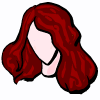 | | Haare | | capelli | ||
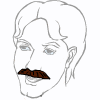 | | Schnurrbart | | baffi | ||
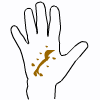 | | Narbe | | cicatrice | ||
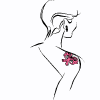 | | Tätowierung | | tatuaggio |